How Transaction Speeds Shape Real-Time Decision Trees in Live Roulette Sessions on Regulated Mobile Platforms
Felix Butler · Nov 22, 2026

How Transaction Speeds Shape Real-Time Decision Trees in Live Roulette Sessions on Regulated Mobile Platforms
Transaction speeds on regulated mobile platforms directly influence how real-time decision trees process bets, payouts, and game outcomes during live roulette sessions, and data from industry reports shows these speeds determine the branching paths algorithms follow when players place wagers or receive results. In November 2026 observers note that platforms operating under frameworks from bodies such as the New Jersey Division of Gaming Enforcement maintain average transaction times under 200 milliseconds, which allows decision trees to evaluate multiple variables including player history, bet size, and regulatory compliance checks without introducing delays.
Core Mechanics of Transaction Processing in Live Roulette
Live roulette sessions on mobile devices rely on continuous data streams between the player interface, the live dealer feed, and backend servers, while transaction speeds govern the rate at which each bet confirmation updates the decision tree structure. Researchers at institutions tracking gambling technology report that slower transaction windows force trees to collapse certain branches early, such as limiting options for complex betting patterns like neighbors or call bets, whereas faster speeds expand those branches to accommodate real-time adjustments based on current table dynamics. Regulated platforms integrate payment gateways that prioritize low-latency processing, and figures from the Australian Communications and Media Authority indicate mobile transaction volumes in licensed environments grew by 18 percent year-over-year through late 2026, directly correlating with expanded decision tree depth in roulette software.
Decision Tree Adaptation to Varying Speeds
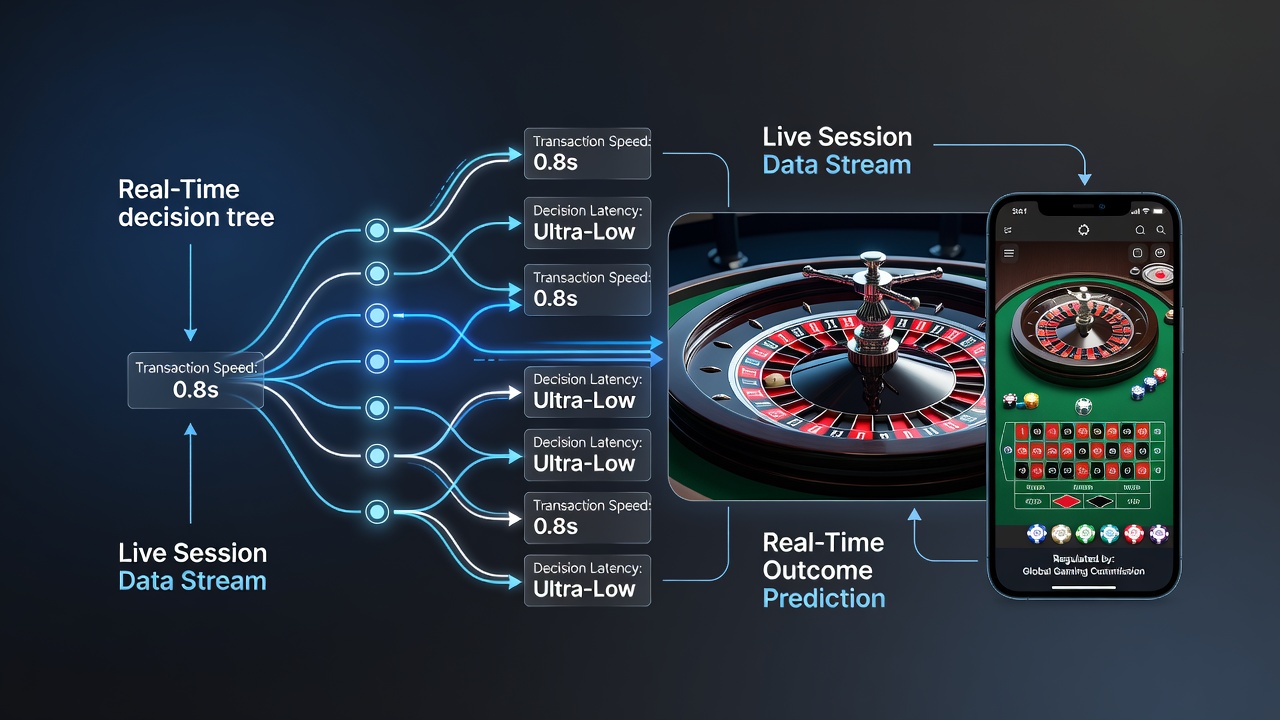
Decision trees in these environments function as layered algorithms that split on conditions like bet validity, account balance verification, and outcome randomization, yet transaction speed acts as the primary gatekeeper for how many splits occur before a session outcome finalizes. When speeds exceed typical thresholds, trees incorporate additional nodes for risk assessment and responsible gaming flags, while delays compress the model into fewer pathways that prioritize core functions such as payout calculation. Those who analyze gaming data note that platforms using edge computing reduce average latency to 50 milliseconds in November 2026 tests, enabling trees to process sequential decisions like doubling down after a loss without interrupting the live stream.
Regulatory Standards and Their Influence on Speed Requirements
Regulated mobile platforms must comply with technical standards that set minimum transaction speeds to ensure fair play, and authorities in regions such as the Isle of Man Gambling Supervision Commission enforce rules requiring sub-second processing for live dealer games. These standards shape decision trees by mandating that every branch includes audit trails, which faster transactions allow to complete seamlessly within each roulette spin cycle. Data indicates that jurisdictions with updated mobile licensing criteria in 2026 saw a 22 percent reduction in reported latency issues, permitting more granular tree models that track player behavior across multiple sessions without compromising session flow.
Technical Infrastructure Supporting Speed and Tree Complexity
Backend systems on regulated platforms combine 5G networks, optimized APIs, and distributed ledger elements to maintain consistent transaction speeds, and this infrastructure determines the computational resources available for expanding decision tree nodes during live roulette. Studies from European research consortia reveal that platforms achieving consistent speeds below 150 milliseconds support trees with up to 40 percent more conditional branches than those limited by higher latency, covering factors from table limits to individual player profiles. And when transaction bottlenecks arise, trees automatically prune non-essential paths to preserve regulatory compliance and session continuity.
Player Experience and Algorithmic Responses
Players encounter these dynamics through immediate bet confirmations and result displays, yet the underlying decision trees adjust their structure based on measured transaction speeds to balance responsiveness with security protocols. Observers note that in high-volume periods during November 2026, platforms reroute traffic through prioritized channels to keep speeds stable, thereby preserving full tree functionality for features such as instant replay analysis or bet history integration. Industry reports highlight that such adaptations prevent session interruptions while maintaining the integrity of random number generation tied to each roulette outcome.
Future Developments in Speed and Decision Modeling
Advancements in network technology continue to push transaction speeds lower on regulated platforms, which in turn allows decision trees to incorporate predictive elements based on aggregated session data from live roulette play. Figures from Canadian provincial regulators show ongoing pilots in 2026 where sub-100 millisecond processing enables trees to simulate multiple outcome scenarios before each spin concludes, enhancing both operational efficiency and regulatory oversight capabilities. Those monitoring the sector report that these evolutions remain grounded in compliance frameworks that prioritize verifiable transaction logs over expanded algorithmic complexity.
Conclusion
Transaction speeds serve as a foundational element that determines the scale and precision of real-time decision trees in live roulette on regulated mobile platforms, with evidence from multiple regulatory sources confirming direct links between processing times and algorithmic branching capacity. As infrastructure improves, these interactions continue to evolve while remaining anchored in standards that ensure secure and compliant gaming environments.